
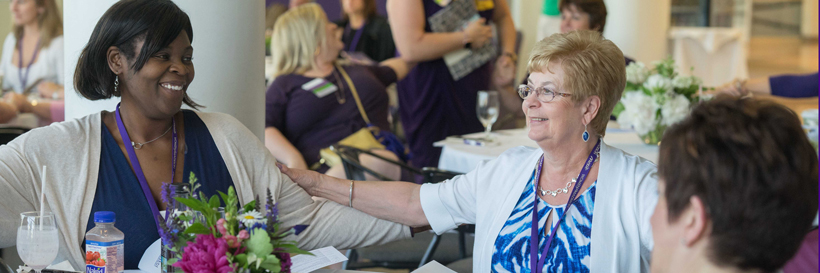
On March 26th, 2024, I decided to step out of my comfort zone and attend a webinar called Caring for a Caregiver hosted by Women for Madison. Megan Shanker, assistant director for Women from Madison, introduced the event and what this network was about. Women for Madison is a network of alumni, parents, and students within the James Madison community. I had no idea this diverse network existed within the campus and its efforts to “enhance the collective involvement and financial impact of women giving to JMU.”
JMU Alumni, Susan Geoghegan speaks on her experience being a caregiver.
Susan Geoghegan was a freshman in 2002, who lived in Eagle Hall. She was a quiet student and remained focused and stayed the course within college. As she focused on her studies in Communications and Marketing, she learned a lot about how her voice can be so powerful. Out of college, she became an event planner and by 2015, she was pregnant with her daughter Lorelei. Being a perfectionist, she strived to be a paper perfectionist mom. When Susan welcomed her child, doctors told her that her daughter had Mitochondrial disease. This disease occurs when there is a malfunction of the structure that produces energy. Lorelei was the 31st case in the world and was told by multiple doctors that she would never walk, or talk, and would have a 2-5 year life expectancy.

Susan was her nurse, doctor, occupational therapist, feeding therapist, and teacher while being a first-time mother. At first, she thought her caregiving journey put her in a dark and isolating place but she still tried to find herself. “Life just sucks.” she bluntly said. She then talks about how Toxic positivity is not what doctors should tell patients or their families. This made her go into a dark place because she had hope. She gives good advice saying how it’s okay to feel this way and how we should just accept that things are just out of our control.
Her second child, Benji also has mitochondrial disease. She compares her day-to-day life to Groundhog Day, where days and nights are extremely long and repetitive. Lorelei passed away when she turned 5 and Susan is scared about what will happen when Benji turns 5.
The apricity hope project
In honor of her daughter, she joined event planning for foundations to create and raise money for mitochondria disease research. Now, she has a non-profit in Norfolk, The Apricity Hope Project, that empowers caregivers to keep pushing during their hard days. As her speech ended, she realized how much of a great mom she is and something was out of her control however she needs to keep going in honor of her daughter.
how to help a caregiver:
After pregnancy, she went through postpartum depression and had high levels of anxiety, she found peace and holding grief and joy at some times. Her friends Christine and Amanda spoke about how to help a caregiver. They knew she needed help with tangible things such as reminders to drink water, take her vitamins, make her food, walk her dog, and clean her house. Her friends are health practitioners and since the death of Lorelei, they’ve been more mindful of her children and how her daughter would be the same age and focus on being in the moment and being a mom and understanding is a gift. Susan says that these two friends have been her rock and they send her positive and encouraging messages every day.

Attending this event made me realize how unexpected life is and how women have a lot on their plate even though they might be suffering on the inside. Susan’s motherhood inspired me in the fact that she was so resilient and positive. I’m glad I got to attend this webinar and wish more attention was given to these powerful and encouraging women.
 ShoutOut! James Madison University