
Books, revered as gateways to diverse perspectives, are facing an unsettling trend in the United States — the surge in book bans. Beyond pretty covers and bound pages lies the erasure of stories, particularly those challenging societal norms related to race, gender, sexuality, and the history of the nation. Today, I will discuss the historical roots of book bans, the current state of book bans, and the harmful implications of book bans, incorporating insights from Tierra Harris’s article, “Book Banning Is Erasure.”
Historical Overview of Book Bans
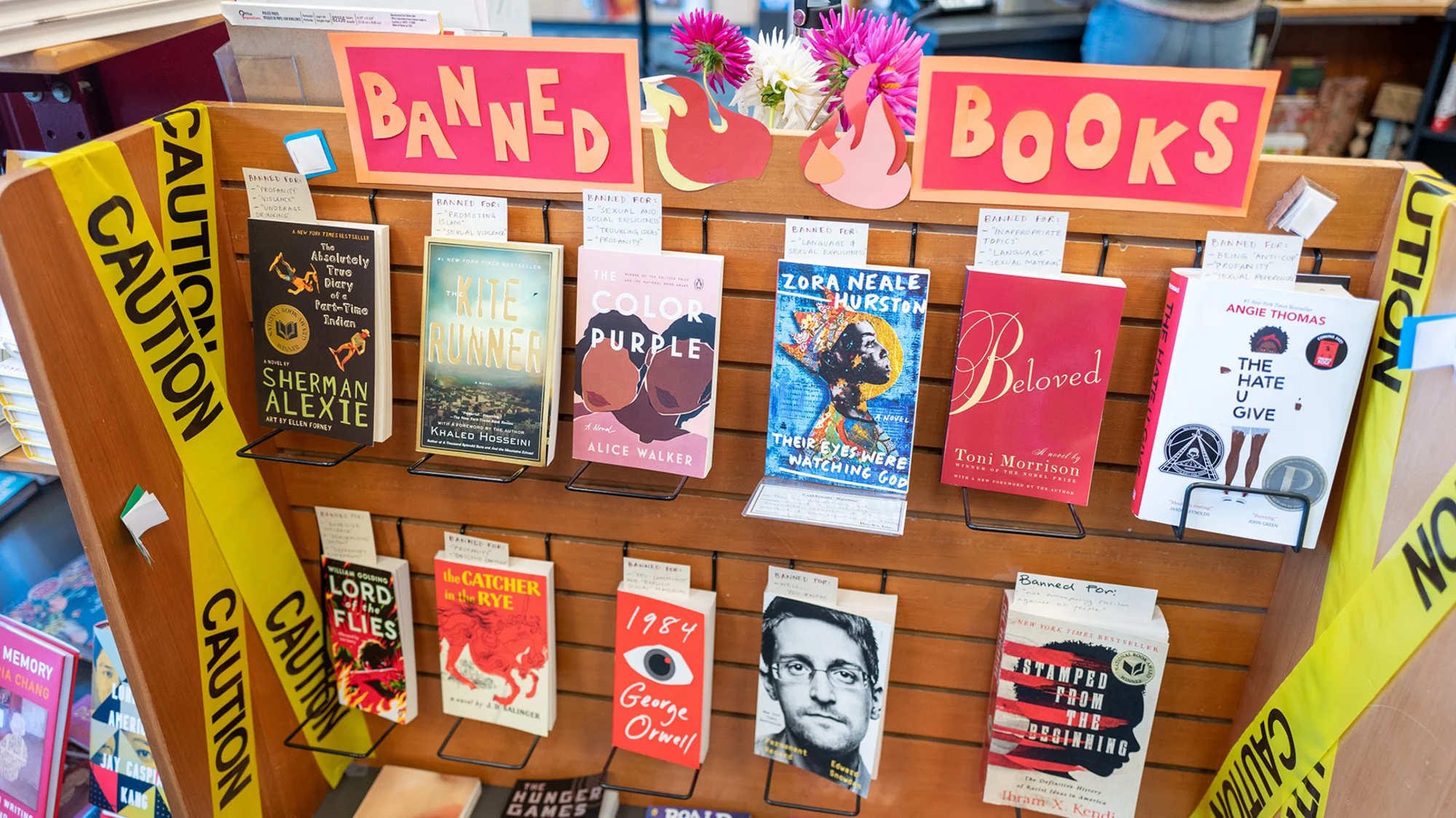
The historical trajectory of book bans in the U.S. has taken a concerning turn. Tierra Harris notes the mass increase in book bans reported by major news outlets in 2022, citing examples such as ‘The Hate You Give,’ ‘This Book Is Gay,’ and ‘Monday’s Not Coming.’ The unsettling truth is that renowned classics, including ‘To Kill a Mockingbird,’ ‘The Lord of the Rings,’ and even ‘Charlotte’s Web,’ are vanishing from classrooms and libraries, constituting not just censorship but complete erasure. It is crucial to acknowledge that the voices of women, POC, LGTBQ+ members, and other marginalized communities, often face particular scrutiny in this landscape.
Current State of Book Bans
In the contemporary literary landscape, book bans persist. Harris draws attention to the escalating number of banned books in Texas, Pennsylvania, and Florida, with 713 books banned in Texas alone between January 2021 and March 2022. The situation is a cause for concern as it reflects a trend of erasing narratives, stifling the literary freedom of readers, and limiting access to diverse perspectives. Governments play a pivotal role in enforcing bans, raising questions about the balance between protecting citizens and infringing on their right to access information.

How Book Bans are Harmful
The repercussions of book bans are far-reaching, especially for students belonging to marginalized communities. Such bans perpetuate a skewed narrative, limiting access to diverse perspectives and hindering the development of critical thinking skills. Drawing from Harris’s article, it’s evident that the harm caused by book bans extends beyond limiting recreational freedom. The erasure of stories, especially those that explore race, gender, and sexuality, adversely affects students of color and the LGBTQ+ community. By restricting certain books, marginalized communities are further oppressed and discriminated against, reinforcing existing power imbalances.
Feminism and Book Bans
Tierra Harris introduces the voices of three authors—Alexandria Bellefleur, Sophie Gonzales, and Ashley Herring Blake—who have personally felt the impact of book banning. Their favorites, like ‘The House on Mango Street,’ ‘Simon vs the Homosapiens,’ and ‘Felix Ever After,’ are not exempt. Harris emphasizes the disproportionate targeting of authors from racialized and marginalized backgrounds, shedding light on how book bans directly impact marginalized voices.
From a feminist standpoint, book bans take on a nuanced dimension. Certain books, especially those penned by or about women, find themselves disproportionately targeted. This phenomenon extends beyond individual book bans, revealing a systemic issue that inhibits the amplification of women’s voices in literature. Intersectionality plays a pivotal role here, as the censorship disproportionately impacts marginalized voices within the feminist discourse.
Conclusion
In conclusion, the conversation around book bans in the U.S. is an urgent one. The harmful effects, particularly on marginalized students, highlight the urgent need for a reevaluation of current policies. From a feminist perspective, it is evident that book bans disproportionately affect women’s voices, emphasizing the need for a more inclusive and intersectional approach to literary freedom. As we navigate the ongoing conversation about feminism and women’s voices in literature, let us strive for a literary landscape that embraces diversity, challenges norms, and fosters a more inclusive understanding of the world.
 ShoutOut! James Madison University
This piece had great insight into how this type of censorship can undermine ideas of intersectionality and inclusivity in a learning environment. Because of book banning, students with lived experiences that are different from what is presented or taught in the classroom are excluded, which to your point, “Reinforce power imbalances”. It is a sad reality that book bans are still happening in our country.
LikeLike
Thank you for bringing this to our attention, as a college student with access to the internet and other learning resources I do not think too much about any censorships that are enforced on students. with the book ban I feel students are not getting the proper education needed to navigate the real world.
LikeLike
The urgent need for a more inclusive and intersectional approach to literary freedom is clear in your post. As we engage in conversations about feminism and women’s voices in literature, your plea for a literary landscape that embraces diversity and challenges norms is both inspiring and necessary.
LikeLike
Thank you so much for your offerings on this topic! I really enjoyed how organized the piece was, specifically by how you provided a look at the history, the current state, and some feminist viewpoints. I hope that positive change can occur and steps can be taken so that all voices can be hard.
LikeLike
Thank you for covering this topic! Book bans have been increasing over the years with heavy emphasis on LGBTQ+ books and other books about very common issues and topics in the real world. I agree with your take on this, and limited the youth’s education on real and important topics can be so detrimental.
LikeLike