
While learning more about the feminist movement in Bolivia, I came across a name multiple times: Adela Zamudio. And then it hit me, how did I not know who this woman was? So here is what I have learned and gathered.
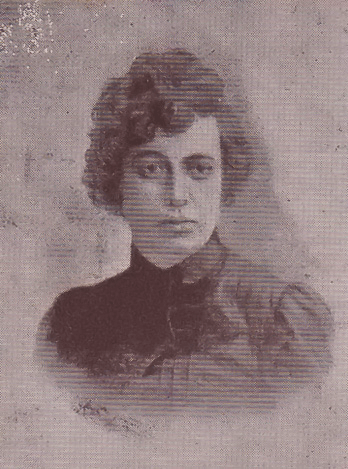
Paz Juana Plácida Adela Rafaela Zamudio Rivero was born in 1854 in Cochabamba, Bolivia, during a time when girls’ education was hugely limited, and opportunities for women were extremely restricted. Society expected women to remain within the home, taking care of domestic responsibilities, marriage, and motherhood. Despite this, Adela began to write poetry as a young woman and was self-taught. However, this was uncommon and discouraged for women. Because of this, she created the pseudonym “Soledad,” meaning Solitude, to write and publish her work without facing immediate backlash.
She eventually emerged as the most famous Bolivian poet of her time and became a strong social voice, working as an educator, activist, and feminist who helped start the feminist movement in Bolivia. Bolivian society at the time was shaped by strict and oppressive gender roles and traditions that confined women. Adela used her writing to challenge the political, religious, and cultural norms around her. She was not shy to address controversial topics, and she used poetry and essays as a way to question systems of power. Adela was also deeply influenced by the patriarchal society she lived in, where she witnessed women and younger girls being denied legal rights, access to education, and meaningful opportunities. These injustices shaped her writing, as she openly criticized the legal and social systems that treated women as inferior to men. In this way, she used literature as a tool for resistance.
One of her most famous poems, “Nacer hombre,” directly translated as “To Be Born a Man,” attacks gender inequality in an unapologetic way. In it, she writes about how men are given privilege at birth, while women face restrictions and must deal with men’s behavior and the consequences of their actions. She specifically talks about how men cheat, and women have to forgive, a woman can’t vote, but the poorest felon can, and how a man is allowed to kill a woman, all because he is a man. Through this poem, she exposes the double standards in society and forces readers to confront the unfairness of these norms.
Her work was controversial in many ways. She criticized the Catholic Church’s influence over education and social life, helped open conversations about women’s rights and freedom of thought, advocated for improved access to schooling for girls, and supported non-religious education. She pushed for educational reform in 1905, when she helped establish a school for young women in Cochabamba called “the Liceo,” promoting critical thinking rather than passive obedience. While further talking to my family about Adela, I learned that my grandma went to this school, and how, later on, the women who went there were seen as prestigious. That personal connection made her legacy feel even more meaningful.
Today, Adela Zamudio is honored as Bolivia celebrates Día de la Mujer Boliviana (Bolivian Women’s Day) on October 11th, her birthday. Her legacy and impact continue to inspire movements and reforms throughout the country. She is remembered for breaking societal norms, influencing divorce laws, advocating for the arts, pushing for educational reform, and demanding equality in a world that resisted it.
 ShoutOut! James Madison University
