
In my previous post, I discussed how beauty standards meant to oppress women continue to prevail even when women make up the majority of athletes within a sport meant to be a safe space for all types of people.
While I focused on mindsets of many women in the sport in my last post, it is important to also pay attention to how these gendered ideas impact men in color guard. Being small for men in guard means having a harder time tossing and lifting: two things that they tend to be highlighted for. Seeing this coexist with the way that female members are described as “tiny” or “liftable” is a microcosm of existing in a patriarchal society as a whole.
We refer to our male teammates as “Big strong men”, especially when they are doing something that requires a lot of physical strength. While this term is used in a more ironic way, (normally when they carry something heavy that no one wants to help with), the implication is that women in guard are useful and successful when they are small, and men when they are achieving feats of strength, or doing something “for” the rest of the guard. I have seen how this has been harmful to the men on our team, from them carrying a disproportionate amount of heavy props, or things that are unpleasant to move and lift every rehearsal, to people jokingly saying “It’s because he’s a man” when referring to their skill, rather than considering the years of work and practice that it takes any person to get to the level that they are.
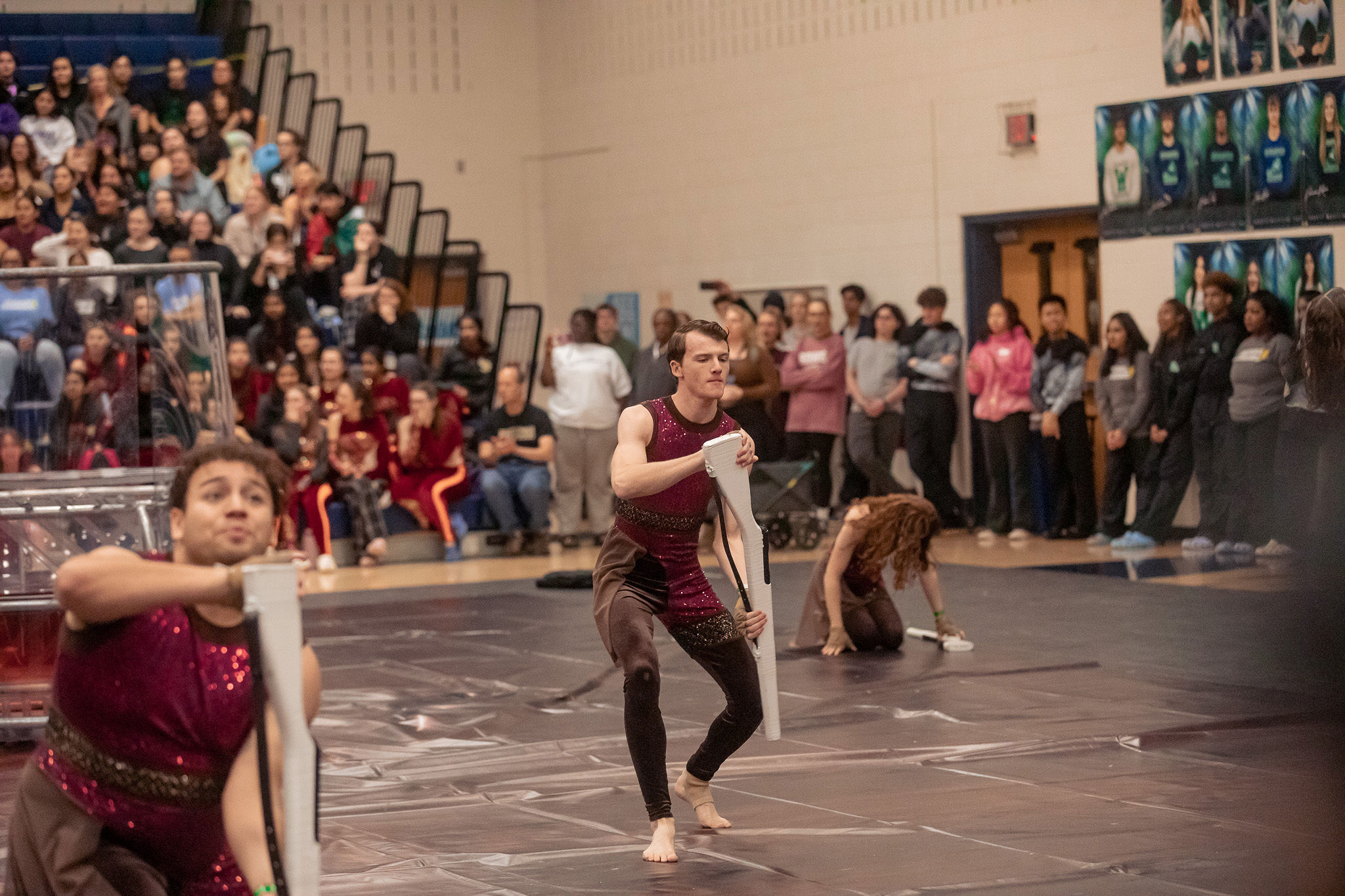
Gender is not a factor in placement on the floor, treatment, or opportunity with the JMU color guard, but on world class guards (the Major Leagues of winter guards), it is common to see mostly men spin the heaviest equipment, mock rifles. Similarly, dancers in world class guards tend to be made up largely of women, and men who can dance matching the same energy and sass draw louder cheers from the crowd than if women were performing it alone. The best example I can find is a performance by AMP winter guard in 2022, where men make up the majority of the weapon spinners and a male solo dance performance draws cheers that the dance section of just women did not, despite the nature of difficulty differing greatly.
While on the surface, cheering louder for a man dancing than women may just seem like encouragement, it upholds the same ideals and stereotypes that our language does: that we expect men to be strong and stoic, and that women must always perform to the highest caliber. Falling into patterns that traditional gender roles encourage in this sport is not because winter guard was designed to oppress. In fact, the majority of the community is LGBTQ+, female, or other marginalized groups. And yet, I see ways in which we as performers have become purveyors of patriarchal norms in a sport that is meant to be a welcoming, safe space for all types of people, without gender roles as a barrier to achievement. As athletes and performers, how can we change the language and expectations within our sport of the arts so it can accurately reflect the creativity and expression that it is meant to, with no stereotypes attached? I can call out the language on my team when I hear it, and choose to engage with it differently, but making change on a much larger scale requires conscious efforts and action of everyone within our community.
 ShoutOut! James Madison University