
JD Vance has been fixated on the United States having “more babies” long before being sworn in as Vice President. Vance complained in a 2021 interview with Fox News of US democrats being “a bunch of childless cat ladies”. While he has since expressed regret for how he phrased this statement, he has stood by his message that the country needs more children. He frames declining birth rates as a threat to social security, worried there aren’t enough young people joining the workforce to balance the number of social security dependents. To incentivize families into having more children, he has advocated for increasing child tax credits to $5000 from its current $2000. JD Vance is not the only member of Trump’s team to express frustrations about low birth rates. Newly appointed US special government employee and father to 11 Elon Musk has been very vocal on Twitter about his concerns for the “population collapse”.
Fear not dear readers as a “population collapse” is unlikely to happen anytime soon. The global population is expected to increase to 9.7 billion by 2050 according to the United Nations. But as the global population continues to grow, birth rates in the United States have indeed been steadily decreasing, hitting a record low in 2024 at 12.009 births per 1000 women.

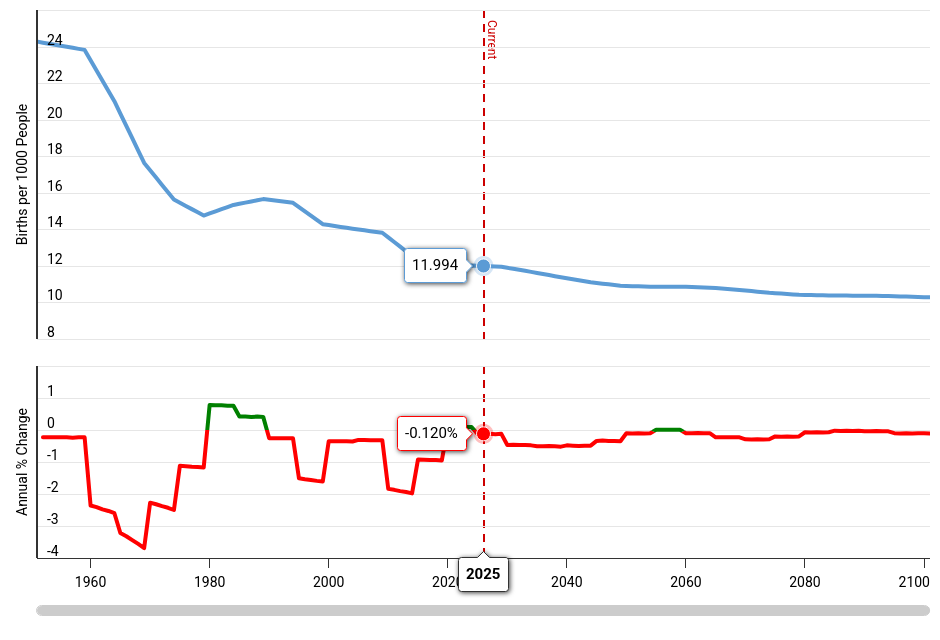
While politicians like JD Vance are concerning themselves with how to encourage women to have kids, I am more concerned with exploring the reasons why women currently feel discouraged from having kids.
Financial reasons are easy to blame for declining birth rates in the US, after all, families can expect to spend $237,482 on their child from birth to the time the child turns 18. In addition to the costs of raising a child, potential parents need to consider parental leave policies at their jobs, rising health costs, and rising costs of higher education. With all the financial blows that come with having a kid, it is easy to imagine the benefits of not having a baby. Look at the D.I.N.K. (dual income no kids) trend on TikTok:
And while a changing economy plays a huge role in the decision not to have kids, various cultural changes are also at play. Expectations for what it means to be a mother and a parent are different now. Mass media has become more influential in our lives, connections can now be made online instead of face-to-face. The COVID-19 pandemic has drastically changed how we live and plan to live. All these social factors play a large role in American women choosing not to have kids.
_(cropped).jpg)
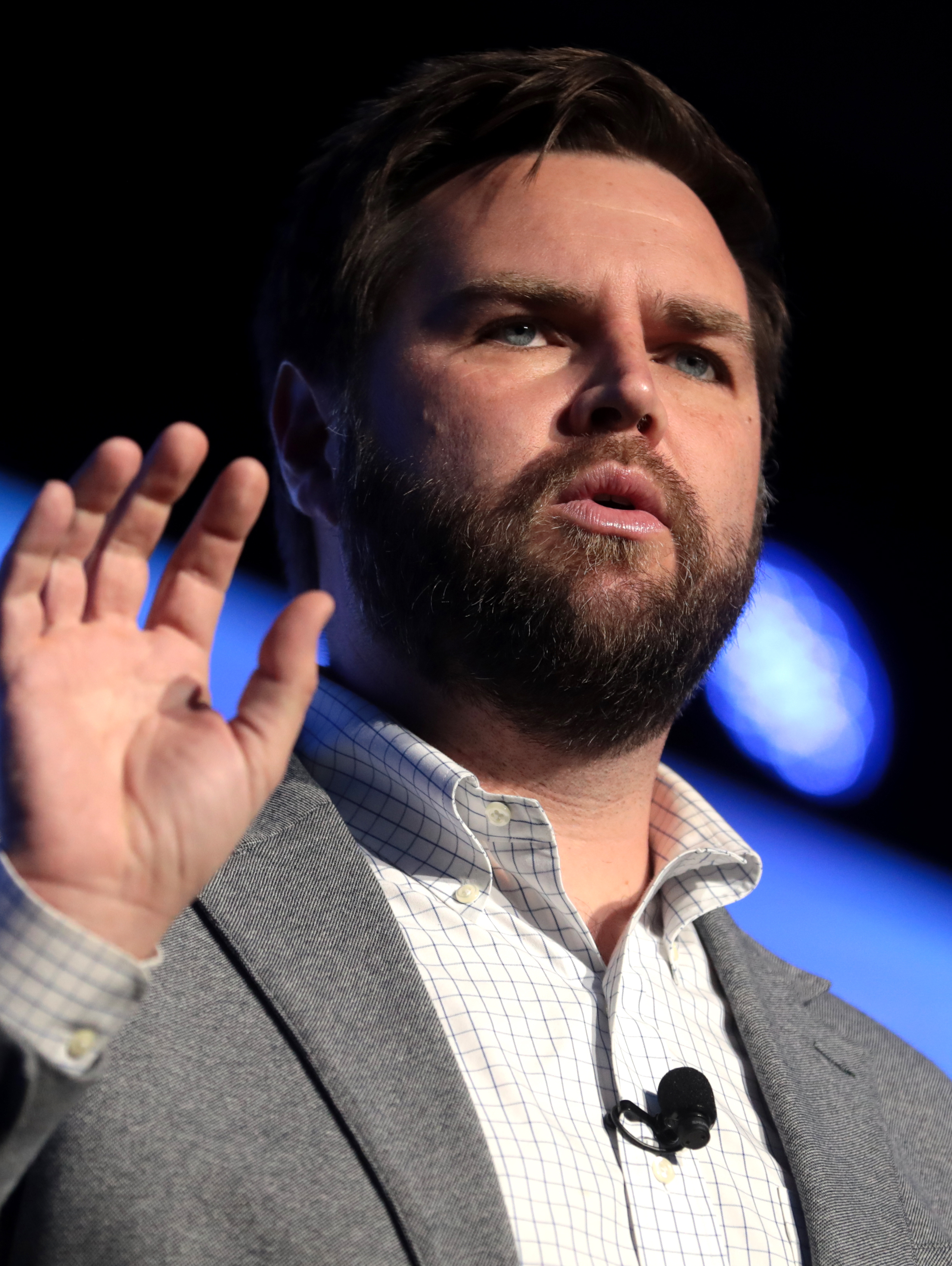
Despite JD Vance’s snide remarks about “childless cat ladies”, many women choose to remain child-free because of the lessened stigma surrounding not having kids. After centuries of expecting women to find fulfillment by marrying a man, raising a family, and keeping a house, modern American women have the freedom to find fulfillment elsewhere like travel, a career, or a hobby. Plus, considering the mass isolation caused by a global pandemic on top of increased dependence on smartphones, it is no surprise that today’s women are more comfortable spending time alone instead of seeking out interpersonal connections.
But while child-free women are judged less harshly in the 21st century, the same cannot be said for women who do become mothers. Many women choose not to have kids in fear of not being a good enough parent. Expectations for parents are much higher now, we expect parents to provide children with more than just food and a roof over their heads but with love and nurture so that children do not just survive but succeed. Social media and family vlogging trends have made it so that mothers are no longer just judged for their parenting methods by intimate relations such as neighbors or family members but by strangers on the internet.
Expectations haven’t just gotten higher for mothers but for fathers too. Tolerance for “deadbeat dads” has dwindled and so has women’s trust in men. Thanks to mass media, instances of infidelity, domestic violence, and emotional abuse are not often kept behind closed doors like they once were but rather published in a tabloid or posted on TikTok. Because having a child typically binds a child’s mother to the child’s father for at least 18 years no matter their relationship with each other, it is no wonder that women are becoming more selective when it comes to choosing who to have a child with, if at all.
I could think of a million other cultural reasons for women not having kids from uncertainty about the future to increased access to birth control, but this blog would be way too long [maybe I need to make a part 2]. While I am curious to see how JD Vance’s initiatives to increase birth rates play out, it is clear that women’s reasoning for not wanting to have kids is not entirely based on money so I am not optimistic that a larger tax break will change anything. With the global population still on the rise along with an unstable political and environmental future, also I don’t see low birth rates in the United States as an “issue” that needs to change.
Related Post: