
For far too long, women have been told to wait: wait for their rights to be respected, wait for their autonomy to be acknowledged, wait for their voices to be heard. The 4B movement rises from this issue, drawing inspiration from its roots in South Korea, where it came from a want to reject the societal pressures imposed on women, gender inequalities, and violence against women. The four Bs of South Korea: biyeonae, bisekseu, bihon, and bichulsan; no heterosexual dating, sex, marriage, or childbirth. In the US, leaders of this movement are calling for women to delete dating apps, take self-defense classes, and to get on birth control. Like all movements, it is not without its flaws.

Beneath this empowering message lies a critical question: Who is excluded from this vision of empowerment?
Let us first discuss women who are shaving their heads on social media for the 4B movement. As a feminist movement, we must not devalue any woman for physical attributes. We should not perpetuate beauty standards by framing any decision in a way that reinforces them. Furthermore, shaving one’s head is not part of the 4B movement. 4B leaders are not calling for women to shave their heads. Women shaving their heads on social media serves as a form of misinformation distracting us from what this movement really stands for.
Returning to the main point, the movement’s focus on a total break from conventional ideas leaves little room for difference. The 4B movement suggests an all-or-nothing approach, excluding women who cannot fully participate.
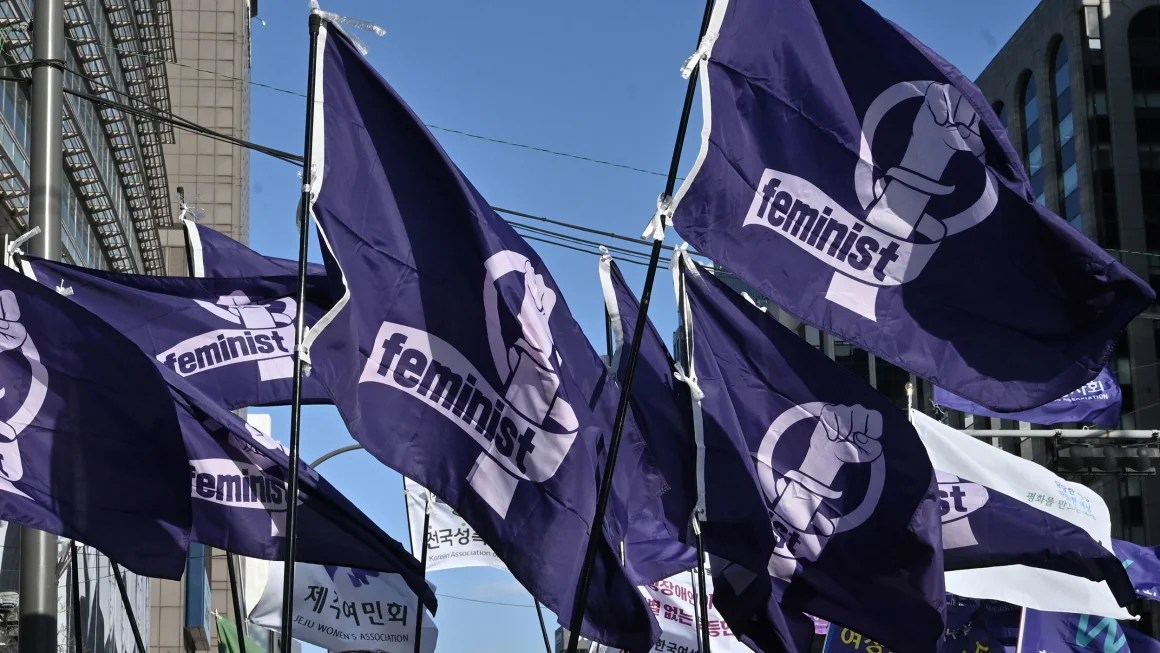
Feminism should include all women across different contexts. Women who face significant economic, social, or cultural barriers might find the 4B movement inaccessible. Women who have the privilege to afford to take those self-defense classes, access to birth control, and the ability to cut out male influence fit the narrative promoted. Many women are caught in complicated, often coercive, relationships due to financial or social dependence and cannot “cut out” male influence. Others have supportive male figures they want in their lives. Gender non-conforming individuals or women who don’t fit this feminist narrative at all are sidelined. The 4B movement overlooks these realities.

The 4B movement focuses too solely on personal empowerment and fails to address broader issues such as education, healthcare, or housing. Let us not oversimplify the lives of women within the patriarchy, especially of those who face intersectional forms of oppression. Women from marginalized communities, such as women of color, LGBTQ+ women, or working-class women, risk being left behind through this mass individual withdrawal. 4B misses an opportunity for intersectional and systemic feminist progress.

4B framework, which suggests deleting dating apps, taking self-defense classes, and getting on birth control, poses a one-size-fits-all approach to an incredibly complex issue. That said, we must acknowledge the differences between the South Korean 4B and the US’s 4B. Political science professor Katharine Moon, to The New York Times, said South Korea’s 4B movement was based on a range of feminist issues impacting women’s lifestyles. The 4B movement in the US has foundations surrounding one issue: abortion rights. While I make no attempt to undermine the importance of bodily autonomy, I do wish to address the limited focus of the US’s 4B movement. I do not ask anyone to reject this movement but rather challenge multiple layers of the patriarchy and our governing systems.
Let your activism extend to and account for all women.
 ShoutOut! James Madison University