
Over the past few weeks I’ve been working my way through Lena Dunham’s new book, Not That Kind of Girl. As I read, I laughed a lot. I also was struck by how much I related to Dunham’s stories. Unlike Dunham I have not grown up in NYC, or attended a super liberal school, or been the creator/writer/director/star of an HBO show… yet. Despite the differences in our experiences, I still was able to relate almost everything Dunham wrote about to my own life.
Not That Kind of Girl is divided into 5 sections: Love and Sex, Body, Friendship, Work, and Big Picture. All of these topics are things that most women have experienced no matter their circumstances. Specifically, sections about body image, sex, rape, and being a women in the workplace resonated with me. Not only did I enjoy Dunham’s auto-ethnography from a feminist viewpoint, but I also liked it because it was damn funny. Dunham’s voice shines through the pages, and her writing style is so personable that I sometimes felt Lena and I were just chatting over a cup of coffee. 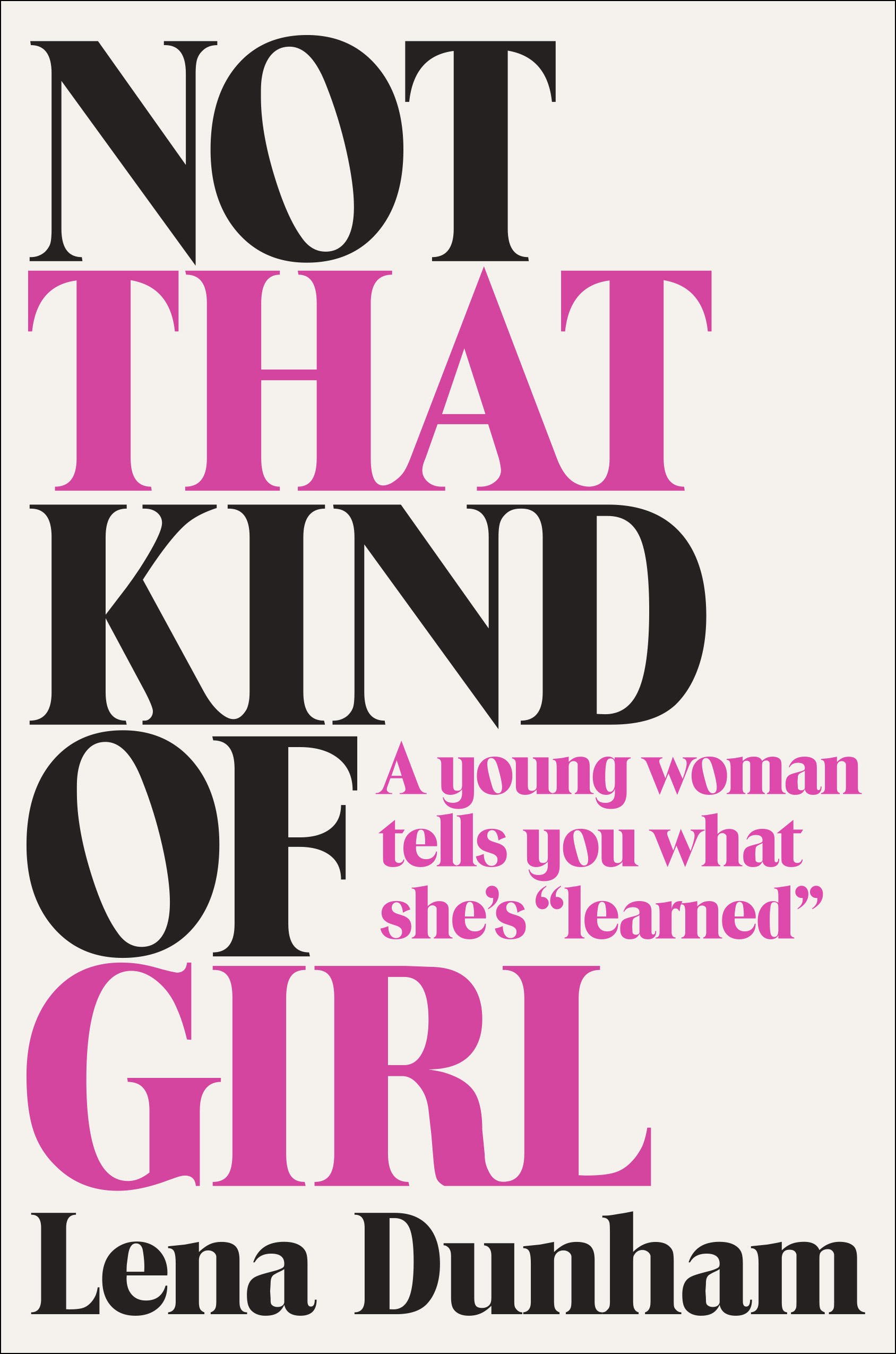
Often the media bashes Dunham. Why? I think its because she is successful, and young, and smart, and funny, and breaks the conventional mold of what someone who is the star of a TV show looks like. For all of these reasons and more, I think she is an amazing feminist role model. Is she perfect? No. But no one is. Is she a perfect feminist? No. But no one is.
Throughout her memoir, I appreciated her candor and her willingness to self disclose. I didn’t necessarily agree with everything she said, but it is her story- not mine.
One essay in her book that has garnered considerable press attention is entitled “Barry”. In her account, Dunham shares her experience of an ambiguous sexual experience one night in college after being drunk and high on Xanax and cocaine. This story especially resonated with me because of how closely it resembles so many stories that have happened on my own campus. It also calls to mind the debate about how if no means no, does yes mean yes? Obviously Dunham was in no state to consent, but because she said yes, was she not raped? Her story strikes home in so many ways- victim blaming, college hook-up culture, our definition of rape, and rape culture in general.
I definitely recommend reading Dunham’s book in its entirety. It’s funny and fun, but also really hones in on some important topics that are affecting millennial women. I’m so happy that Dunham is using her fame to impact feminism in a positive way, and I can’t wait to read more from her!
 ShoutOut! James Madison University
Hey girl! I bet you wrote this before this got blown up but what is your take on the sexual abuse allegations against her sister? I read a really interesting article on Jezebel that talked about how people are attaching a sexual nature to Dunham’s actions when really she was just exploring the body (albeit in a strange way). What say you, Dionne? PS: When you do have your own HBO show will you put me in it?
Love,
Cher
LikeLike
Hi Cher,
I did indeed write this review before the sexual abuse allegations blew up the media. I read the section in Dunham’s memoir and didn’t give it a second thought while reading it because of the context she provided and the fact that she was 7. I think that the media is definitely blowing this out of proportion and disregarding the context provided in the memoir. Children are naturally curious and I think the allegations of abuse are sexualizing a child’s curiosity. I also think that it is the “victim’s” decision to narrate their own experiences and decide for themselves what is harmful behavior and what is not. After the allegation of sexual abuse surfaced in the media, Dunham’s sister (Grace) made a statement that she never saw the acts as harmful or negative and they haven’t affected her at all. What do you think Cher?
Love,
Dionne
ps: YES.
LikeLike