
In honor of how much I’ve learned this semester and grown as a feminist I wanted to do a little history till now of feminist movements. The 1968 Miss America pageant was the backdrop for one of the most iconic events of modern feminism in the United States. Members from the New York. Radical Women organization demonstrated along the Atlantic City boardwalk against the pageant’s perceived misogyny. Protesters threw household items that they believed fostered the collective image of submissive females into a large trashcan. In went pots, pans, Playboy magazines and bras. They planned to set the contents ablaze, but the police weren’t keen on that idea. Nevertheless, the next day’s news stories heralded participants’ bra burnings. Ironically, American feminism didn’t begin as an outright quest for gender equality. It evolved from activism for broad social causes to today’s spectrum of female-focused theories and philosophies that span topics from education and pornography to race. The following five feminist movements, arranged chronologically, should shed some light on the history of feminism as well as the ideas and pioneers behind it.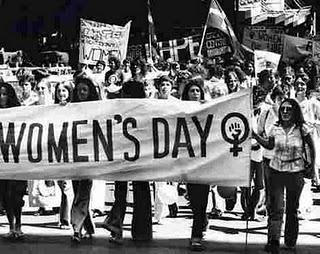
1. Suffrage Movement.
Anti-slavery and temperance movements sowed the first seeds of feminism in the mid-1800s. In 1840, Elizabeth Cady Stanton and Lucretia Mott were denied seats at the World Anti-Slavery Convention in London due to their gender. Yet, the first women’s rights advocates in the United States might not describe themselves as feminists. The use of the word “feminism” to describe the support for women’s rights migrated from France to the United States by 1910. While Suffragettes fought for women’s right to vote, feminism includes legal rights, financial independence and the transformation of the relationship between sexes
2. Women’s Liberation Movement
After World War II, a growing number of women pursued higher education and entered the workforce, but they weren’t scampering to the tops of career ladders or bursting through glass ceilings. The Women’s Liberation Movement of the late 1960s and 1970s therefore emerged from women’s desires to revolutionize the fundamental aspects of female life at that time: domesticity, employment, education and sexuality. A younger, more radical set of feminists was organizing simultaneously, energized by the activity of the Civil Rights Movement and anti-Vietnam War movements. They also used consciousness-raising sessions to share personal experiences and incite discussion about pertinent women’s issues and sexuality.
3. Black Feminism
The Women’s Liberation Movement was criticized by some feminists — both black and white — for its exclusion of nonwhite, working class women. Although the omission wasn’t intentional, this fracture spurred the rise of black feminism. The struggle of black feminist Bell Hooks (Gloria Watkins’ pseudonym) between choosing to affiliate with the male-led Black Power Movement or the white female-led Women’s Liberation Movement exemplifies the philosophies behind black feminism. In response, some black feminists formed their own groups, such as the National Black Feminist Organization and the National Alliance of Black Feminists.
4. The Feminist Sex Wars
Anti-porn feminism arose in the late 1970s, pioneered by Catharine MacKinnon and Andrea Dworkin. At that time, pornography had become more readily accessible, and to some feminists, the overtly sexual portrayal of women violated their civil rights and promoted sexual violence. That notion didn’t sit too well with other feminists who believed that a woman’s total liberation included sexual freedom. Consequently, sex-positive feminism, also known as pro-sex feminism, surfaced the early 1980s. These feminists, including Betty Dodson and Gayle Rubin, sought to reclaim heterosexual intercourse as a mutually pleasurable experience for women and men. Sex-positive feminism has evolved to cover not only intimate physical relationships, but also the sex industry, including pornography and prostitution.
5. Riots Girls
Riot Grrrls responded to male-dominated music scenes by forming their own bands and making homemade magazines called ‘zines that communicated their do-it-yourself, punk rock values and feminist ideas. National news outlets picked up on the trend, and in 1992, Riot Grrrls declared a media blackout. In true punk fashion, Riot Grrrls sought to keep things independent and counterculture. Grrrl ‘zines, groups and Web sites still exist and circulate in communities around the world today.
 ShoutOut! James Madison University
One thought on “Top 5 Feminism Movements”