
While in class the other day, I overheard two girls talking about fat shaming, and one parroted to the other the old standby for empowering women who feel like they are too big: “real women have curves.” As glad as I was that the conversation was aimed at making one person feel good about her body, I was sad that it had to be at the expense of classifying women as real or not.
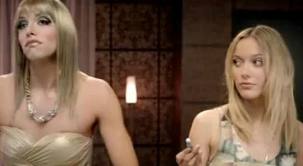
Though statements that begin by describing “real women” are empowering to those who are classified as real, it’s important to note what the implications are for the rest of us. Calling women “real” based one aspect of their body type seems unfair to those of us who don’t fit that mold, implying that we are somehow inauthentic. This may seem relatively innocuous, but by implying that there are criterion to determine authenticity of gender is inherently a transphobic way of thinking. Transphobia is the fear of or hostility towards people who challenge gender. But wait! You say. Challenging gender sounds like the whole point of feminism. Too true. That’s why it is important to recognize aspects of our culture that are transphobic but somehow still sticking around even in feminist circles, like gum on the shoe of our movement: not only is it upsetting, but it’s also embarrassing.
So what’s wrong with talking about “real women”? Well, in a world where trans* people are fighting just to exist every day in a gendered society, the effort to carve a space for themselves must be exhausting. Trans* people are told every day by the media, our legislation, and even other feminists that they are different, unnatural, or unwelcome. Think about the last time you saw a trans* person in the media. Were they represented as a multidimensional character who has real life struggles and feelings? Or were they portrayed as a character whose only dimension was their identity as trans*? Were they the butt of the joke? I only have to watch an episode of Saturday Night Live to get my fix of transphobic dribble, where they actually have skits where the entire punch line is that there is a trans person. Our legislators are still trying to make and uphold laws that force trans* people to use bathrooms according to their genitals and not their gender identity, which can not only out them as trans*, but make it unsafe for them to go at all. And of course there are movements like the HRCcampaign that promote marriage equality but forget the “T” tacked on to the end of the queer umbrella and has historically excluded the trans* community from the legislation they advocate to make it presumably more likely to pass.
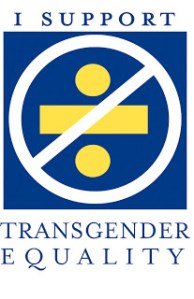
However, when we begin to tell groups of oppressed people that we have no room for them in our fight to end oppression, it’s a problem. As feminists, we need to understand that all women are real women, and that there are ways to validate ourselves without taking the power away from someone else.
 ShoutOut! James Madison University
The ending paragraph that you wrote was very powerful and showed such truth and honesty! Great thoughts and post!
LikeLike
As a transgenfered male I very much agree. I think all womem should be respected and allowed to feel comfortable without any restrictions of any kind. We are all people and just being that can be a difficult journey without trying to meet some imposed, socially or self restrictions or ideals that make the journey difficult at best. All women should train their children and help grow a generation of consciounce and tolerate people. The world would be e much better place when that starts happening.
LikeLike