
I recently wrote a post on whether Pinterest is killing feminism, and stipulated that Pinterest isn’t necessarily a bad thing. After all, it can be used to promote pro-feminist (or, at least not anti-feminist) sentiments. More fundamentally, Pinterest is a user-generated platform, meaning it is reflective of what the users themselves choose to pin. And anyway, who are we to criticize what someone chooses to pin?
After much thought, countless discussions (but seriously, check out the comment thread on “What’s So Pinteresting?” for some pretty awesome discourse), and quite a bit of research, I’ve decided that this topic is worth revisiting, as it opens up a pretty consequential discussion on the matter of choice. I find myself often inclined to say something along the lines of “feminism is a choice, and we should all respect one another for our choices, and at its core feminism is about equality, so the matter of what a woman ‘pins’ is rather trivial.” Perhaps this is too simplistic in scope, though. It’s not about taking what’s on your virtual pin board at face value: there’s a lot more at stake for feminism than that.
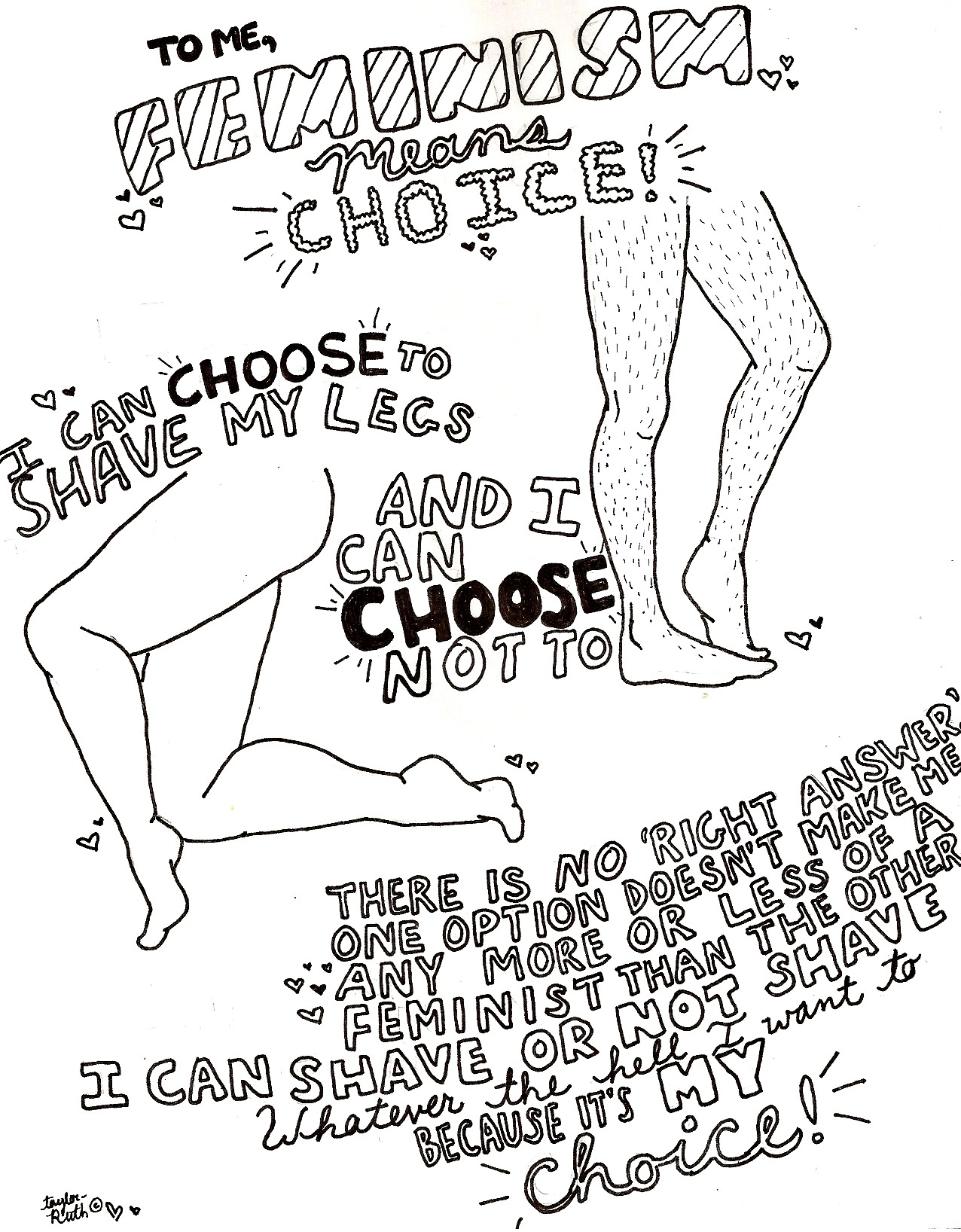
The fact is that what a woman puts on her Pinterest board is a reflection of what she values. Given that the feminist movement lends profound credence to the idea that the “personal is political”, there is absolutely a link between what a woman personally values, and how this relates to her lived politics. I won’t rescind my prior stance that “feminine is not anti-feminist”, nor will I advise anyone to drop what she’s doing and remove those pins that relate to clothes, jewelry, or Martha Stewart. I’ll admit, though, that we make a huge mistake in thinking that we have the freedom to pin (read: value) whatever we want. While that’s partially true, as women, we are still socialized to value certain things over others. Pinterest is problematic in that it is a virtual prototype that reveals the misconception in assuming that a woman’s choice is entirely her own. Enter the notion of “constrained choice,” and how it relates to a problem that is, as I’ve said before, much bigger than Pinterest.
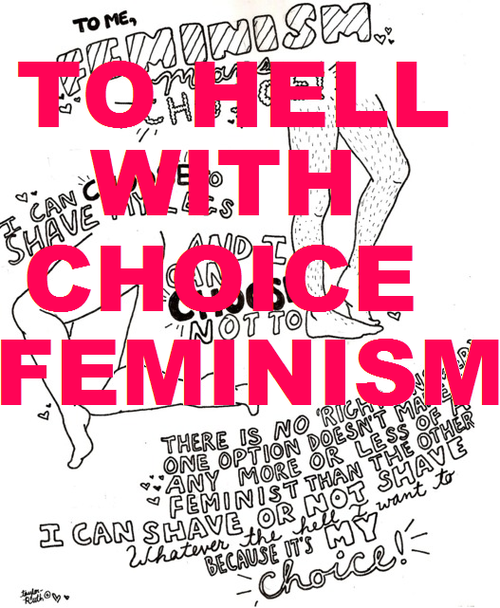 Constrained choice, in a nutshell, occurs when your choices are limited (duh). In a feminist context, constrained choice looks like this mundane ritual we ladies partake in every. freaking. morning.:
1. You choose to wear a dress,
2. So you choose to shave your legs.
3. Or, you’re feeling like “fighting the man” today, so you skip shaving your legs and choose to wear pants instead. Rah, rah, sisterhood!
Let’s try this one again. Chances are, if you’re going to wear a dress, you’re not going to have the lady-balls to walk out that door looking like a stunt-double on the set of Planet of the Apes—no ma’am, you’re going to shave, or make the “choice” to wear pants. But is this choice really your own? Or are you operating within your available choices, under the umbrella principle that shaved legs is feminine, and therefore socially acceptable expected?
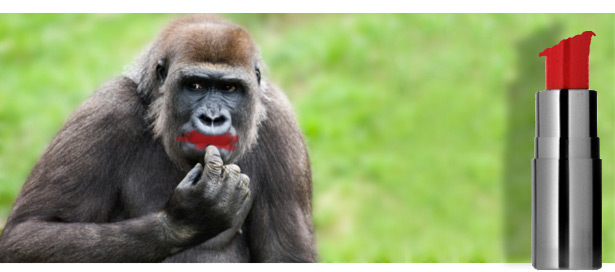
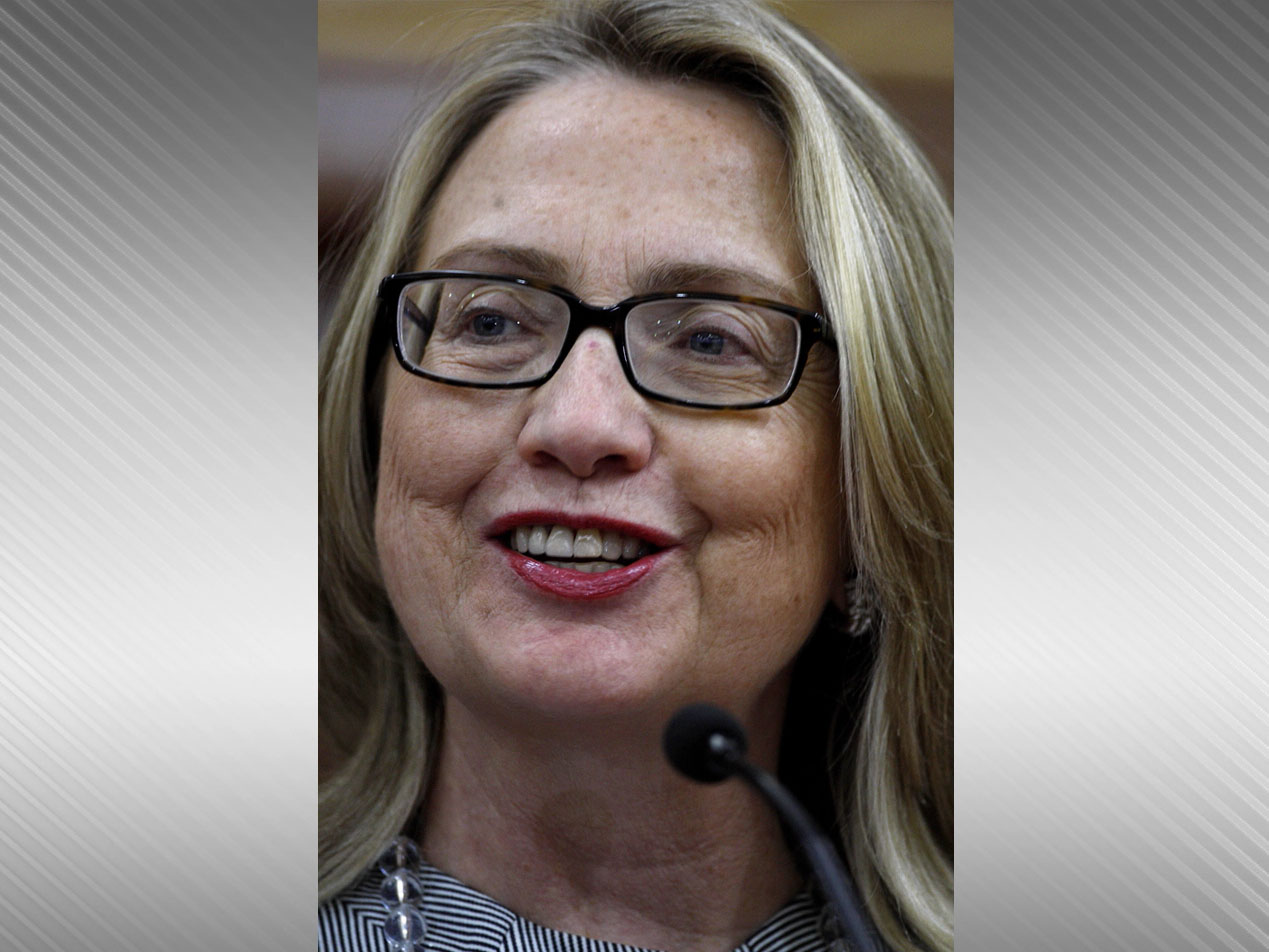
Same goes for those pretty-in-pink principles we love oh, so much. You can say you make the choice to wear makeup every day, because “it makes you feel beautiful.” But is that your choice, or is it society’s dictate that makeup is equated with beauty that subliminally drives your love for L’Oreal? It takes a pretty confident gal to go against that grain, when we’re so heavily engrained with the notion that makeup makes us pretty. As a pathetic example, last year, Hillary Clinton emerged to make a statement sans-makeup, save for a bit of red lipstick. She was torn apart by the media, with reporters rhetorically asking the former Secretary of State if she had “forgotten her makeup”, and claiming that she didn’t look “put together”. Are you kidding me? I forgot Ms. Clinton was getting paid to advertise for Maybelline, instead of taking care of the country’s foreign affairs. Thanks for clearing that up.
The list of examples goes on and on. My point is that yes, you can make the choice to be feminine, and embody the manicured, made-up, clean-shaved standards that come along with it. But lest we mistakenly think that that choice is a result of our purely unconstrained free will. I can claim to “incidentally” reaffirm certain qualities that align with my gender role, and while that doesn’t mean that I buy into patriarchal oppression, it is my responsibility to be aware of that privileged position. It’s important to consider that just maybe, on some level, a part of my choosing to shave my legs and wear makeup comes from the desire to avoid the discomfort that comes along with not doing these things. To an extent, we’re not totally exercising our own free will in “indulging” these desires…we’re being obedient.
The biggest problem comes in when we “other” those individuals whose choices directly conflict with social prescriptions of what women should value. It is wrong and un-sisterly when women who choose not to follow this code of conduct are criticized for breaking “protocol”. In order to follow through my earlier logic of “we should respect one another’s choices”, we have to respect AND support those women who live their politics by abstaining from these patriarchal regulations of ladylike appearance, behavior, and attitude. So long as these women are ostracized for straying from the norm, the problem of constrained choice will remain a threat to feminism.
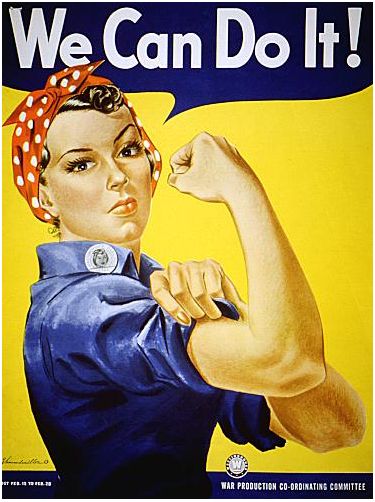
Does this mean that you’re wrong for liking your mani-pedis, dressing up, doing your hair, or pinning your wedding? No, it doesn’t. I’m not calling you out for pinning material that automatically comes with patriarchy’s stamp of approval. I’m still not saying (nor will I ever say) that your feminine tendencies, even as showcased on Pinterest, make you any less of a feminist. However, to say that you have the unfettered choice to do these things, and then choose the path of least resistance, is at its best naïve. So, what can we do? Awareness of the limitations, and acceptance of those women who really are choosing to take the road less traveled, are our biggest defenses in the issue of constrained choice. At the end of the day, inclusion is still the name of the game. Rah, rah, sisterhood.
 ShoutOut! James Madison University
Great post! Your example of makeup – choice or not? – is something we have discussed several times in my feminist philosophy course this semester and we have never come to any real consensus. It was also this train of thought that inspired me to start the Imposed Cultures series, to expose things we think of as “choice” as rooted in patriarchal traditions of the past. My professor asked me if I thought my series was being oppressive itself by saying these things (ie wearing makeup or shaving our legs) are actually not a choice and are “imposed.” I guess she was worried that I was taking away women’s free will and agency in these acts. I am still worried she might be right, but what I am trying to do with the series is provide women with information that has often been hidden/devalued. I think they should know what’s there – then their choice is actually a choice. What do you think?
LikeLike
Christina, love the post. I am officially a fan and have so enjoyed witnessing the evolution of your thought as this discussion unfolds. I hope you’ll check out my blog every now and then and weigh in regarding practices of contemporary feminism. Feminism needs women like you to hold us all to a higher standard and to encourage us to think about our actions as political. Yes, the personal is political, but we get into a messy downward spiral when we begin to say our politics are personal. We deserve more! That is the pleasure of politics–to be able to discuss, disagree, debate, and demonstrate our commitments. Not to hide behind the mantra of “choice” as an excuse not to engage in the political ramifications of our actions. Exhilarating!
And to Hannah Grace, your work sounds very interesting. Feminism gets caught in an interesting dichotomy between individual agency and oppression. Putting all your chips on oppression means there is nothing the individual can do to transcend circumstances and systems; to subscribe wholly to free will and agency negates oppression–a cornerstone of feminism. My most recent work revolves around encouraging women and feminists to “render their actions meaningful” and engage in “beneficence.” See http://rottenwithperfection.com/?p=214
Your project sounds really interesting and I would like to hear more about how you present these issues.
LikeLike
Ginna, my apologies for such a delayed response, but I appreciate your kind words. I also owe quite a bit of this evolution of thought to the challenging questions you posed in my original post–you certainly gave me a lot to think about! Feminism needs women who are willing to challenge each other; complacency is not an option. I am looking forward to future discourse with you, both on this blog and yours.
-In the bonds of sisterhood.
LikeLike
Hannah Grace, I don’t think that your logic takes away the agency of the act of say, shaving your legs. However, it DOES point out that there is a significant social ramification for that choice: you’re praised as feminine for partaking, or you’re “othered” for your refusal. The keyword here is “constrained”. Yes, there’s some semblance of a choice, but it’s limited based on social constructs. What we’re talking about it a slippery slope, middle-ground dilemma. I submit that you’re not oppressive in recognizing the danger in constrained choice–if anything, you’re actively taking back agency by making conscious choices.
LikeLike