
Keeping in line with last week’s post, I wanted to investigate another book series turned major motion picture phenomena from a feminist lens. This particular series puts The Hunger Games and Twilight movies to shame, as it has six of the top 25 highest grossing movies ever. One could say that they have had a truly “magical” effect on popular culture. Of course, I’m talking about…

Harry Potter! For those who don’t know (I honestly don’t know how one could have avoided Harry Potter), the series is about the progression and growth of a young wizard named Harry Potter, and his two best friends, Hermoine Granger and Ron Weasley. Each book chronicles a different year at the wizarding school, Hogwarts. Harry is the “chosen one” who must ultimately beat Voldemort, the most evil dark wizard of all time,. Though that synopsis does not do Potter justice, I’d imagine that most people are familiar with the series by now.
While the books and movies are geared to a young audience, the well-developed world, depth of characters, and adult themes ensure that Harry Potter is appreciated by fans of all ages. Because it is easy to identify with the story, characters, and universe of Harry Potter, there is a real transcendent quality for fans. Perhaps the best part of the Potters is that there are just so many positives that one can take away from the series. The only real “controversy” (besides occasional anti-wizardry nuttiness from religious groups) is that the books and movies get progressively darker and more mature. However, because many fans (myself included) grew up with Harry, this more mature tone really resonated with audiences.
From a feminist perspective, the series is truly excellent. The world of Harry Potter isn’t filled with gender inequality. There are great wizards of all sexes. Hermoine Granger is routinely considered the best wizard in her class. Many of the professors and female characters are strong and powerful wizards as well. Even among the Deatheaters, women have prominent roles. Often, when women are depicted as strong, they are simultaneously normatively feminine or even hyper feminine in order to make this strength “acceptable” to the general populace. In the world of Harry Potter, women fit all sorts of roles. In this way, the series departs from established norms which have limited female characters. In addition, the mythos of Potter does address sexual preference, as author J.K. Rowling has since revealed that Dumbeldore, the greatest wizard of all time, is gay. Ultimately, the characters of Harry Potter are accepted by fans for their actions and personalities—not for sex, gender, and physical reasons.
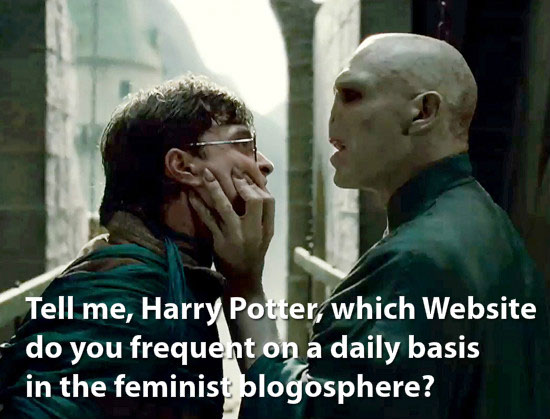
Despite creating a more utopian world of equality, Rowling does bring oppression into the series. The role of house elves, an enslaved species of servants, shows audiences that inequality should not be overlooked. Furthermore, it is Harry Potter and his friends who largely identify this problem and show acceptance and change in the way they treat house elf characters. This extended allegory exists to force audiences to examine inequality and privilege in the muggle world we all inhabit.
Finally, Harry Potter himself is critical to the equality of the series because his sex is ultimately irrelevant. Harry could have been anyone—whether he is male or female is of no consequence. Harry’s status as “the chosen one” is arbitrary. He just happened to be the person that Voldemort tried to kill at a point in which his soul was stretched too thin due to the creation of multiple horcruxes. Thus, who Harry was born is not what matters—it is the person who he became through his life experiences, which led him to be kind, humble, and willing to sacrifice himself for the good of others.

There has been a ton of work done on feminism and Harry Potter (including some by our own former editor/blogger eszenyme) and there is far too much to cover in a simple blog post. However, I think that the Harry Potter books and movies are excellent conduits for the discussion of equality and feminism. There are just so many layers to the world of Harry Potter which are filled with ideas about gender, sexuality, inequality, morality, and more. The craftpersonship and depth of the writing ensures that Harry Potter is no passing craze, but an addition to the literary world for people of all ages.
What does the community think? Do you relate Harry Potter and ideas of feminism and equality? If so, what in particular speaks to you about the books and movies?
 ShoutOut! James Madison University
I love this! As an avid Harry Potter fan (primarily the books but the movies gradually got better) I grew up in the magical world of Hogwarts. I haven’t ever taken the time to rehash the books through a feminist lens but now thinking about it, you make some great points. There is a large amount of gender equity but also the series reflects real world struggles of inequality. I remember my two best friends and I growing up, loved Hermione and aspired to be as smart and talented as her, which is a great thing for all young girls to aspire to be.
LikeLike
Thanks! I do think that there are a ton of layers to Potter and feminism.
LikeLike