
Allow me to address a crucial point. Since turning 18 and starting my experience as a waitress almost three years ago, I’ve grown aware of the gender dynamics prevalent in the restaurant industry. Particularly, there are evident gender implications in regard to how servers earn their paycheck–through tips. It’s a well-known fact that waitstaff often don’t receive an hourly minimum wage. According to the U.S. Department of Labor, the minimum cash wage in Virginia for tipped employees is $2.13 and that rate is consistent in numerous other states as well. Consequently, these workers rely on tips from their customers to reach the minimum wage threshold.
When learning the “dos and don’ts” of serving in the restaurant industry, one quickly finds out the importance of efficiency, organization, and communication skills to ensure adequate customer satisfaction. In addition to these basics, friendliness and appearance emerge as vital factors, particularly in my experience as a cisgender woman, essential for securing substantial tips. This is a matter of considerable importance, given that approximately 68% of servers in the U.S. identify as women and rely on tips as a primary source of income. Therefore, I believe it is significant to examine how the components of friendliness and appearance within gender roles affect tipping practices.
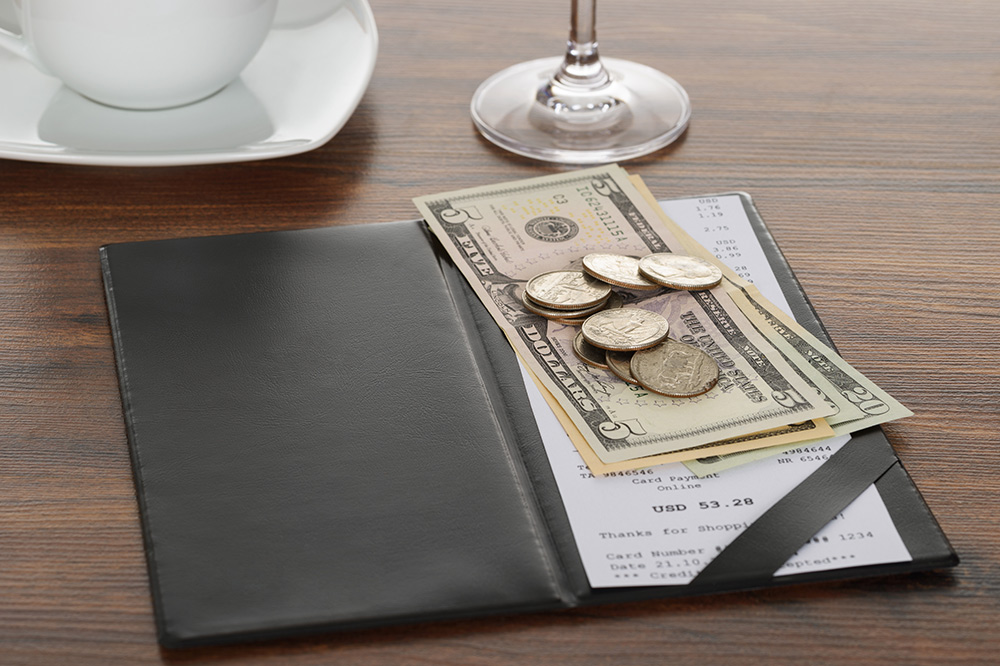
There is frequently an expectation for servers, particularly women, to perform emotional labor such as being friendly, accommodating, and engaging with customers to earn higher tips. Smiling is one particular behavior that I have mastered during my time as a server, as it noticeably enhances my likeability with customers. This expectation perpetuates the societal stereotype that women should embody nurturing, pleasant, and subservient qualities.
In addition, the power dynamics between customers and servers are notable, as customers hold the authority to determine tip amounts. Various factors influence customers’ tipping decisions, including the server’s gender presentation, perceived attractiveness, and adherence to societal norms of femininity. Servers, especially women, may feel pressure to conform to traditional gender norms of appearance in order to receive higher tips. This can include expectations related to grooming, attire, and perceived attractiveness. Personally, I can attest to this phenomenon. When I arrive at work with a full face of makeup, the scent of perfume on my uniform, and dressed in form-fitting yoga pants, my tips noticeably increase compared to days when I don’t prioritize my appearance. Is this a coincidence? I seriously doubt it. It’s evident that women may feel compelled to conform to these stereotypical standards of femininity to increase their tips.

Moreover, I often reflect on a conversation with a female coworker who mentioned that she tends to receive higher tips when she wears her hair in pigtails. I found this remark incredibly intriguing as pigtails are typically associated with young girls. This hairstyle may evoke perceptions of youthfulness and innocence, qualities that could be perceived as attractive or appealing in certain contexts. Customers might view servers wearing pigtails as approachable and non-threatening, potentially influencing their tipping behavior. Although this explanation is speculative and based on societal perceptions, it’s critical to challenge and question stereotypes that contribute to gender-based discrimination and objectification. Servers, regardless of their appearance, deserve respect and fair compensation for their work.
By examining tipping practices in restaurant settings, it becomes apparent that they are closely linked to broader issues of power dynamics, gender inequality, and societal expectations. Advocating for fair wages, challenging traditional gender roles, and promoting workplace policies that prioritize equity can all be steps in addressing these issues within the restaurant industry and beyond.
 ShoutOut! James Madison University