
Don’t walk alone at night. Carry your keys in between your fingers. Always have pepper spray. Pretend you’re on the phone. Look over your shoulder. Always listen.
Notice a pattern? Do you see an underlying theme?
It’s not just, “Don’t walk alone at night.” The implication is, “YOU shouldn’t be walking alone at night.” Although it appears to be obvious, of course it’s a statement directed at an individual, we rarely stop and think, “Wait a minute, why is this directed to me at an individual level?” If this is so prevalent that probably a majority of us are accustomed to hearing this and have taken the necessary precautions to equip ourselves in case of the worst case scenario (at least if you’re femme identifying, you probably carry a little something).

The emphasis on individual and personal responsibility seems to be a narrative that consistently permeates our lives. But wait a minute, why should it be up to an individual to prevent something from happening to them? Shouldn’t we just focus our efforts on trying to prevent it from happening in the first place? And I want you to take a moment to think about what does it mean when our first instinct or thought is to question how a person could let something happen to them. Rather than thinking “why are institutions letting it happen to us?”

For the last few weeks I’ve been participating in JMU’s very own Women’s Self-Defense course. To contextualize this rather unusual occurrence, I merely offer up the fact that my participation can be attributed to the negative reviews I’ve heard about this course. While this seems counterintuitive, I wanted to experience it so I would have credibility when voicing any concerns that arose, which they most certainly have. Ultimately, I do plan on attempting a dialogue, with the hopes of creating a new proposal with changes that can be made to better the course as a whole.
But first and foremost, I want to share some of the content put forward in this course and delve into how it situates itself in myths about victimhood and problematic rhetoric. The first session that is taught primarily deals with information, with emphasis placed on a crime triangle where the only thing that connects victim to perpetrator is: opportunity. Not to fret, because that’s something that YOU can take away. Apparently you don’t have to let yourself become a victim, because even though the instructors said it’s never your fault, you should take steps to make sure people don’t victimize you (I hope you’re writing this down so that you can throw it away once you’re done).
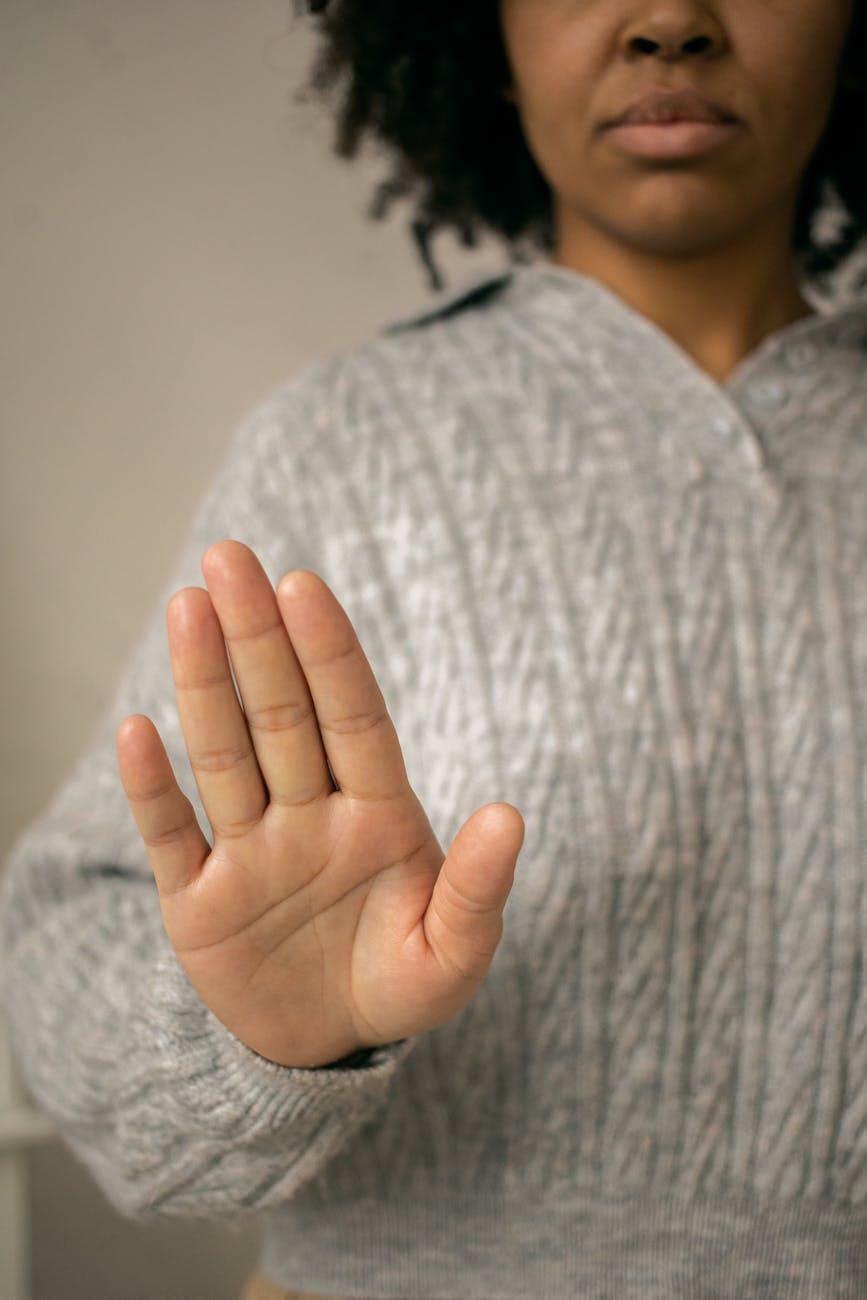
Following this there was a bit about how there’s something that “we all have,” in our toolkit which is essential to utilize: our voice. The individual (not the instructor in this instance, but rather the boss of the instructor) then proceeded to discuss how they heard a lot of people in the room who had been talking rather reserved and quietly when called on to read the powerpoint slides. But they assured us that by the end of the course our soft “no’s” would turn into “NO!” And, naturally, to demonstrate this the individual boomed this out in a loud and startling manner and none were given warning to a sudden yell (which could potentially pose as a trigger for some individuals but never mind that).
Another grievance I had with this was how one of the slides discussing situational awareness and how to not give perpetrators opportunity said to “walk confidently.” Because that’s what everyone’s been doing wrong. Golly gee, good to know. I’ll try to refrain from being perceived as too meek and mild, I’ll stand a little taller and I’m sure I’ll be immune to any and all present dangers.
These assessments from the aforementioned individuals instructing and helping the class are not only insensitive and furthers the narrative that victims just let assault happen to them, but it’s just plain incorrect. Because not everyone has a voice. I mean literally not everyone is capable of speech. And not everyone can walk with confidence because not everyone can walk. You can’t be situationally aware all the time and listen to your surroundings if you are an individual who is unable to hear. Physical disabilities, visual impairments, hearing impairments, not only all commonly exist but are simply not reflected in the course’s content or ever touched upon.
The final issue I have in relation with this course, is that it is six weeks and only for women. You cannot realistically learn how to ingrain these self-defense mechanisms and habits into your bodies reflexes just by attending six two-hour courses over the span of a month and a half. And also if it’s a women’s only course, what do they constitute as a woman?

Because according to them you do have to be a WOMAN (yes, they do indeed capitalize it) in order to take this course. And in one instance I did hear the instructor conflate gender and sex, assuring us that if we were to go to the police a do a PERK kit that it would be done by a nurse of the same-sex. A minor slip-up? Potentially, but that doesn’t mitigate the damage that could potentially be done to someone whose gender does not align with their sex. Also, I would like to add that anyone can be a victim, men, women, non-binary, and any gender nonconforming individuals. While I understand its prevalence with women and wanting to create a safe space, especially for women who may have negative reactions to men or others attending, that doesn’t mean we shouldn’t have to consider how others are impacted by assault or sexual violence.
As someone who has been deeply vested within work pertaining to survivorship and advocacy, I have spent years attempting to become more well-versed in how we can be more intentional in this line of work. To not acknowledge the different ways in which various identities are disproportionately impacted by sexual violence, and how so often their status as a precarious population puts them further at risk is a huge disservice.
But it’s a course designed for all women right? So shouldn’t that be good enough? Except for the fact that this course isn’t designed for all women, it’s designed for a certain type of women. One that is able-bodied, cisgender, and anyone else who falls outside of this is essentially unable to participate. In summary, this course is not accessible, it is not inclusive, and it perpetuates several myths about victim blaming and individual responsibility even if that is not the intention. It’s what comes across.

As someone who has been deeply vested within work pertaining to survivorship and advocacy, I have spent years attempting to become more well-versed in how we can be more intentional in this line of work. To not acknowledge the different ways in which various identities are disproportionately impacted by sexual violence, and how so often their status as a precarious population puts them further at risk. But it’s a course designed for all women right? So shouldn’t that be good enough? Except this course isn’t designed for all women, it’s designed for a certain type of women. One that is able-bodied, cisgender, and anyone else . In summary, this course is not accessible, it is not inclusive, and it perpetuates several myths about victim blaming and individual responsibility even if that is not the intention. It’s what comes across.
Personally, I’m tired of being gifted pepper spray and taught self-defense because I don’t want the illusion of safety, I want to actually be safe.

And I don’t want to fault individuals who take this course because they want to feel safe or feel that they can protect themselves. Of course people want to feel safe. Of course people want to protect themselves. Many of these individuals have most likely been taught or led to believe that self-defense is the most important thing because that’s what everyone says. Even if they disagree with my point and don’t believe in the importance of prevention, I still don’t fault the individuals for trying to fill in the gaps where our institutions have failed. But I will fault the course, I will fault the problematic rhetoric, I will fault how inaccessible and exclusive it is, and I wall fault the institution that has failed to rectify or attempt to solve this systemic issue.
At the end of the day, if we’re going to have self-defense courses we must completely reframe the way we view self-defense and how it is taught. Rather than heralding self-defense as a cure-all solution to stop an assault while it’s happening, we should acknowledge that it is merely a facet or last resort. Instead, we should gear our attention towards actual crime prevention because no one should feel responsible for the actions of others. The onus should never be on the individual to not let crime happen to them, it should be on institutions to stop it from happening in the first place.
 ShoutOut! James Madison University
This post was very thoughtfully written and forced me to think about the narratives of self-defense much differently. Most self-defense classes fail to consider those who are not able-bodied and they assume that everyone has the stress response to fight. Yes, having the skill set can be helpful, but know one truly knows how they are going to react in that moment.
LikeLike